
The video on the right contains advice from the USA after a number of Toyota cars were recalled because of sticking gas pedals.
The information below will help you to prepare for an emergency that will only ever effect a very small handful of the world's drivers.
Stay calm! This might be easier said than done for some people, but you can reassure yourself now that you have control.
Your vehicle brakes have immense power - check this by driving you car at about 40 miles per hour on an empty road (approx. 60kph) and gently (be very careful!) pressing the footbrake with your left foot, gradually increasing the pressure to slow the car down.
By doing the exercise above you will not only reassure yourself, but you will also have gained some practical experience of how the car will feel in an accelerator emergency. All of the following actions will be almost simultaneous, but by rehearsing them in order in your mind you will be fully prepared in the event of an emergency.
Brake firmly:
The first thing is to brake firmly to counteract the effects of acceleration. Remember, your brakes have lots of power. The footbrake should be sufficient - avoid temptation to use the handbrake because it might cause a sideways skid.Press the clutch:
Press the clutch down to disconnect the engine from the wheels. When you press the clutch the engine may start to over-rev but in most cars this will be cut by the engine management system. In a worst case scenario you could wreck your engine by over revving - but you would still be alive!Select neutral in an automatic:
In a manual car keeping the clutch down will normally be sufficient. In an automatic, move the selector to the neutral position.Look for an escape route:
While braking look out for an escape route - this could be the hard shoulder on a motorway (freeway). If changing lanes avoid sudden steering; swerving the car could lead to loss of control - if at all possible stay in a straight line.After you stop switch off:
As soon as the car is stopped and safe, switch off the engine.
Using the ideas above you will be able to stop in a few seconds.
If the problem is intromittent, contact your dealer - Toyota aren't the only company to have had issues with 'sticky' accelerators - the problems are not always considered serious enough for companies to issue recall notices but if there is a known issue your main dealer will have had a Technical Service Bulletin (TSB).
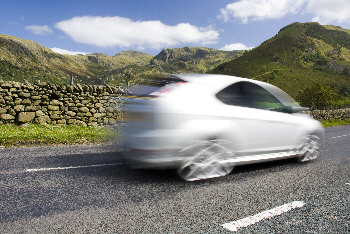 Avoid the temptation to try to un-stick the accelerator. Even if you can see the pedal. the problem is probably somewhere else - in the linkage or engine management system for example.
The only exception to this advice would normally be if there is an obvious cause that you can fix without being distracted from the road - an example might be the pedal getting caught under a mat in the foot-well, or something loose, for example a drinks can, jamming the pedal.
An alternative, or additional method is to switch off the engine without selecting neutral - but beware - turning off the engine will disable your power steering and reduce the efficiency of servo assisted brakes if the pedal is pumped two or three times.
Another danger is that there is a risk of activating the steering lock, especially in a high adrenalin situation. Modern engines are fitted with devices to prevent them from 'over-revving' so the engine is unlikely to suffer if you leave it on until after you stop - it will just make a lot of noise.
After stopping make sure you know what is happening all around, especially on multi-lane roads, to reduce the risk of further danger.
Stay calm... Stay Safe!